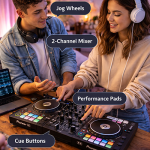
Starting your DJ journey can feel overwhelming with countless equipment options available. However, 2-channel DJ mixers for beginners offer the perfect entry point into the world of DJing without breaking the bank or complicating your learning process.
This comprehensive guide will walk you through the 7 essential features that make certain mixers ideal for newcomers. Whether you’re mixing at house parties or dreaming of club gigs, understanding these fundamentals will help you make an informed decision for your first mixer purchase.
1. Understanding Basic Mixer Layout and Controls
The foundation of any great 2-channel DJ mixer for beginners lies in its intuitive layout. A well-designed mixer should have clearly labeled controls that make sense from day one.
Channel Faders and Volume Control
Each channel features a vertical fader that controls the volume of that specific input. These faders should move smoothly and provide precise control over your audio levels. Look for mixers with replaceable faders, as they’re prone to wear over time.
The master volume controls your overall output level. This separate control allows you to maintain consistent levels between tracks while adjusting individual channel volumes during mixing.
Essential EQ Controls
Every channel should include at minimum a 3-band EQ system covering high, mid, and low frequencies. This allows you to shape the sound of each track and create smooth transitions between songs with different tonal characteristics.
Many beginner-friendly mixers include EQ kill switches, which completely cut specific frequency ranges. This feature proves invaluable when learning to mix, allowing dramatic transitions and creative effects.
The Crossfader Explained
The crossfader sits at the bottom center of most mixers and controls the balance between your two channels. Moving it left emphasizes channel A, while moving right emphasizes channel B. This control becomes your primary tool for transitions and scratching techniques.
2. Budget-Friendly Models Under $300
Quality 2-channel DJ mixers for beginners don’t require a massive investment. Several excellent options under $300 provide professional features without the premium price tag.
Entry-Level Recommendations
Models like the Pioneer DJ DJM-S3, Behringer DJX750, and Numark Scratch offer solid build quality and essential features. These mixers include everything needed to start mixing immediately while leaving room for skill development.
When evaluating budget options, prioritize build quality over flashy features. A reliable mixer with basic functions will serve you better than a feature-heavy unit that breaks down after six months.
Cost vs. Value Considerations
Remember that your first mixer isn’t your last mixer. Focus on models that will support your learning process for 1-2 years before you outgrow their capabilities. This approach allows you to understand your preferences before investing in higher-end equipment.
3. Simple Connectivity Options
Modern 2-channel DJ mixers for beginners must accommodate various input sources. Your mixer should easily connect to turntables, CD players, controllers, and laptops without requiring additional equipment.
Input Variety
Look for mixers offering both line and phono inputs on each channel. Phono inputs include built-in preamps for turntables, while line inputs handle CD players and other standard audio sources.
USB connectivity has become essential for digital DJing. This connection allows direct communication between your mixer and DJ software, streamlining the entire mixing process.
Output Options
Your mixer needs multiple output options to work in different environments. Master outputs connect to main speakers or amplifiers, while booth outputs let you monitor your mix through separate speakers or headphones.
4. Built-in Audio Interface Features
Many modern 2-channel DJ mixers for beginners include built-in audio interfaces, eliminating the need for separate hardware when using DJ software.
Digital Integration Benefits
Built-in interfaces provide direct digital communication between your mixer and computer. This setup reduces latency, improves audio quality, and simplifies your overall system setup.
According to Digital DJ Tips, integrated audio interfaces have become standard features that significantly enhance the digital DJing experience for beginners.
Software Compatibility
Ensure your chosen mixer works seamlessly with popular DJ software. Most manufacturers provide specific software bundles or guarantee compatibility with industry standards like Serato DJ Lite and Rekordbox.
5. Learning Curve Considerations
The best 2-channel DJ mixers for beginners balance functionality with simplicity. Your first mixer should encourage experimentation without overwhelming you with complex features.
User-Friendly Design Elements
Look for mixers with intuitive control layouts where similar functions are grouped together. Color-coded controls and clear labeling help you navigate the mixer quickly, especially in low-light environments.
Avoid mixers with too many advanced features initially. While effects processors and multiple sends might seem appealing, they can distract from learning fundamental mixing skills.
Progressive Skill Development
Choose a mixer that supports your progression from basic beatmatching to more advanced techniques. Features like BPM counters and sync capabilities can assist learning while still allowing manual skill development.
6. Essential Software Compatibility
Modern DJing increasingly relies on software integration. Your 2-channel DJ mixer for beginners should work seamlessly with industry-standard applications.
Serato DJ Lite Integration
Serato DJ Lite offers an excellent starting point for digital mixing. Many entry-level mixers include this software, providing instant access to professional mixing tools and extensive music library management.
Rekordbox Compatibility
Pioneer’s Rekordbox software has become industry standard in many venues. Choosing a mixer compatible with Rekordbox ensures your skills transfer to professional environments.
The Pioneer DJ website provides detailed compatibility information and software tutorials specifically designed for beginners transitioning into digital DJing.
7. Room for Growth and Expandability
Smart 2-channel DJ mixers for beginners include features that remain useful as your skills advance. This forward-thinking approach maximizes your initial investment.
Upgradeable Components
Look for mixers with replaceable crossfaders and channel faders. These components wear out with heavy use, and replaceable versions extend your mixer’s lifespan significantly.
Some models allow crossfader curve adjustment, letting you customize the feel for different mixing styles. This feature becomes valuable as you develop personal preferences.
Expansion Possibilities
Consider mixers with send/return loops for external effects processors. While you might not use these immediately, they provide expansion options as your setup grows more sophisticated.
MIDI connectivity enables control of software parameters directly from your mixer. This feature bridges the gap between hardware and software control as you advance.
Cost and Pricing Considerations
Investing in 2-channel DJ mixers for beginners requires balancing budget constraints with feature needs. Understanding the price-to-performance ratio helps you make informed decisions.
Budget Allocation Strategy
Plan to spend $150-$300 on your first mixer. This range provides access to reliable units with essential features while leaving budget for other necessary equipment like headphones and speakers.
Remember to factor in additional costs like cables, adapters, and software upgrades. These accessories can add $50-$100 to your total setup cost.
Long-term Value
Consider your mixer’s resale value when upgrading. Popular brands like Pioneer, Numark, and Behringer retain value better than lesser-known manufacturers.
Common Mistakes to Avoid
Many beginners make predictable errors when selecting their first mixer. Avoiding these mistakes saves money and frustration during your learning process.
Overbuying Features
Resist the temptation to purchase mixers with extensive effects and advanced routing options. These features often go unused by beginners and add unnecessary complexity to the learning process.
Ignoring Build Quality
Cheap mixers with poor construction create more problems than they solve. Invest in reliable brands known for durability, even if it means fewer features initially.
Neglecting Compatibility Research
Always verify software and hardware compatibility before purchasing. Incompatible equipment leads to frustrating technical issues that hinder learning progress.
Tips and Advice for Success
Maximizing your experience with 2-channel DJ mixers for beginners requires understanding both equipment capabilities and learning strategies.
Start Simple
Begin with basic beatmatching using the pitch faders and your ears. Avoid relying on sync functions initially, as this builds fundamental skills that transfer to any equipment.
Practice Regularly
Dedicate time to regular practice sessions focusing on specific techniques. Short, focused sessions prove more effective than long, unfocused mixing marathons.
Learn Your Equipment
Read your mixer’s manual thoroughly and experiment with every control. Understanding your equipment’s full capabilities enables more creative mixing approaches.
Conclusion
Selecting the right 2-channel DJ mixer for beginners sets the foundation for your entire mixing journey. Focus on these 7 essential features: intuitive controls, budget-friendly pricing, simple connectivity, built-in audio interfaces, manageable learning curves, software compatibility, and growth potential.
Remember that your first mixer should support learning rather than showcase advanced features you’re not ready to use. Invest in reliable, well-designed equipment that encourages experimentation and skill development.
With the right mixer and dedicated practice, you’ll quickly progress from basic transitions to confident, creative mixing that captivates any audience.